
4 Best Gas Log Splitters for Home Use
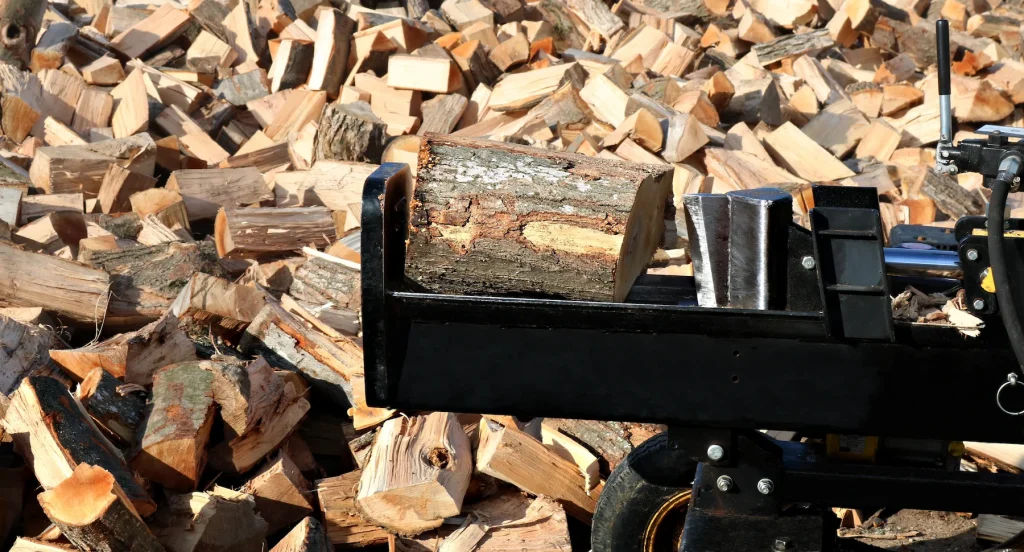
Finding the right gas log splitter for home use depends on more than how much raw splitting force it can deliver. Some models are designed to handle tough-to-split logs. Others offer faster cycles, horizontal and vertical operation or a compact design that makes them easier to transport.
This guide compares four gas log splitters to help you find the right model for your needs. Each machine has different strengths, with recommendations based on their features and the type of splitting work they’re designed to handle.
Our Top Picks
Champion 27-Ton
Best Versatile Gas Log Splitter
Its 27 tons splitting power and horizontal/vertical operation make the Champion 27-ton powerful and versatile enough to handle most splitting tasks efficiently.
BILT HARD 22-Ton
Best Fast-Cycle Gas Log Splitter
A quick working splitter for regular firewood batches. Its short cycle helps keep repeated splitting moving with less waiting.
FULL BOAR 35-Ton
Best Heavy-Duty Gas Log Splitter
For demanding firewood workloads, the FULL BOAR’s 35 ton splitting force helps tackle large rounds and hard-to-split logs beyond typical domestic needs.
Champion 7-Ton
Best Portable Gas Log Splitter
Compact and easier to transport than higher-tonnage splitters, this is a quality portable splitter for lighter firewood jobs.
Product Reviews
Champion 27-Ton Gas Log Splitter
The Champion 27-Ton combines strong splitting force with the flexibility to handle a mix of smaller rounds and heavier logs. Its power helps tackle tough logs that can challenge smaller splitters. Horizontal and vertical operation adds to its versatility by letting you split heavy logs vertically without lifting them onto the beam. This combination of power, two-position operation and practical handling features makes it a great all-rounder for people who split different sizes of logs.
Highlights
- Horizontal/vertical operation for routine splitting and heavier rounds.
- 27-ton splitting force for cutting through most log types.
- Its towable design provides easy moving between work areas.
What to Know
- Hydraulic oil is not included.
Key Specifications
|
Splitting force |
27 tons |
|
Maximum log length |
24 inches |
|
Cycle time |
16 seconds |
|
Operating positions |
Horizontal and vertical |
|
Engine |
224cc |
|
Weight |
465 lb |
BILT HARD 22-Ton Gas Log Splitter
The BILT HARD 22-Ton is designed for log splitting sessions where keeping the work moving matters. Its quick 7-second cycle helps reduce waiting between splits, which can save time when working through a big log pile. The 22-ton rating gives it the force to split large rounds too. For those who value a faster working pace over features such as vertical splitting, the BILT HARD is one to put on your shortlist.
Highlights
- 7 second cycle time for faster repeated splitting.
- 22-ton splitting force for processing larger rounds.
- Side log cradles help support logs and catch split pieces.
What to Know
- Horizontal-only operation requires lifting logs onto the beam.
Key Specifications
|
Splitting force |
22 tons |
|
Maximum log length |
21 inches |
|
Cycle time |
7 seconds |
|
Operating position |
Horizontal only |
|
Engine |
209cc |
|
Weight |
274 lbs |
FULL BOAR 35-Ton Gas Log Splitter
Lifting large hardwood rounds onto a log splitter can be hard work. The FULL BOAR 35-Ton has a hydraulic log lift to take on that task, along with a 32 inch log tray to handle large logs. Its interchangeable 2-way, 4-way and 6-way wedges can produce multiple splits per pass when the wood allows. These features make it a great splitter for processing large batches of firewood with less manual handling and fewer splitting passes.
Highlights
- Less manual lifting when loading heavy logs.
- Faster batch processing when the wood suits multi-way splitting.
- High splitting force for large, awkward rounds.
What to Know
- Multi-way wedges can struggle with knotty or twisted-grain wood.
- The lift control lever takes some getting used to so to avoid logs rolling off.
Key Specifications
|
Splitting force |
35 tons |
|
Maximum log length |
24 inches |
|
Cycle time |
15 seconds |
|
Operating position |
Horizontal only |
|
Engine |
306cc |
|
Weight |
912.7 lbs |
Champion 7-Ton Gas Log Splitter
For smaller splitting jobs, moving a heavy-duty splitter can be more effort than the work requires. The Champion 90720 7-Ton is designed for log work where portability and convenience are a priority. Its low working height makes loading rounds easier, and its compact size helps with transport between locations. The 7-ton splitting force is enough for a remarkable range of logs, even including certain logs that are 30 inches in diameter.
Highlights
- Low beam reduces the lift needed to load rounds.
- Compact frame and wheels simplify storage and transportation.
- Handles smaller rounds without the size of a higher tonnage gas splitter.
What to Know
- The 20-second cycle is slow for processing large batches.
- Large knotty rounds can exceed its capabilities, especially when the grain twists around knots.
Key Specifications
|
Splitting force |
7 tons |
|
Maximum log length |
19.3 inches |
|
Cycle time |
20 seconds |
|
Operating position |
Horizontal only |
|
Engine |
79cc |
|
Weight |
148 lb |
How to Choose a Gas Log Splitter for Home Use
A long splitting session can involve as much handling and moving as splitting. Loading awkward rounds, keeping pace with a pile of logs and storing the machine between uses all help determine which splitter is best for you.
Choose Splitting Force for Your Firewood
Tonnage is a good starting point, but it does not tell you whether a splitter will handle every log. A large round with straight grain may split more easily than a smaller piece with knots or twisted grain. The type of wood also affects how much force is needed.
For small-batch firewood splitting, a compact 7-ton splitter such as the Champion 90720 may handle manageable rounds. If your woodpile regularly includes large oak or maple rounds, a higher-tonnage model gives you more capacity for difficult wood. Base your decision on the toughest logs you split regularly, not the easiest ones. More splitting force usually means a larger machine, so there is no reason to pay for capacity you don’t need.
Match Cycle Time to Your Workload
Cycle time measures how long the ram takes to extend and return to its starting position. It becomes more important when you spend hours working through a large wood pile. The BILT HARD 22-ton splitter has a 7-second cycle, reducing the wait between ram movements compared with models rated at 15+ seconds.
That difference can add up over a large batch. But for occasional use, splitting power may matter more than speed. A quick cycle will not make up for insufficient force or eliminate the need to reposition awkward logs. Consider how much wood you split in a typical session before paying extra for a faster machine.
Consider How You Will Handle Heavy Rounds
If your wood includes rounds that are difficult to lift, look at the loading method as well as the ram force. With a horizontal-only splitter, you must lift each round onto the beam. A model that also operates vertically lets you split logs in an upright position so they don’t need lifting as high.
Log cradles catch split pieces and help keep them off the ground. A hydraulic log lift reduces the effort needed to load large rounds. The FULL BOAR 35-ton splitter includes one. These features are worth considering if you regularly handle heavy hardwood. For smaller rounds that you can lift comfortably, the extra cost and bulk may not be worth it.
Check Transport, Storage and Maintenance
Measure your storage space and consider the route to your work area before choosing a splitter. Check its weight and dimensions, too. Wheels make it easier to move a machine between areas, but they do not necessarily mean it is approved for road towing. If you plan to transport your splitter over long distances, confirm that its towable and check the manufacturer’s speed limits.
Gas models also require fuel, engine oil and regular maintenance. Check which fluids come with the splitter before buying, as some models do not include all the oil needed for initial setup. Do not overlook the hydraulic oil requirements. Factor these costs into your budget and follow the user manual before starting the machine.